Richmond (804) 353-6030          Norfolk (757) 853-5669           Raleigh (919) 965-0203

Subscribe by Email

Your email:

Contact Us

Reliable and Professional Fence Information Blog

Current Articles | RSS Feed RSS Feed

What Are The Ornamental Fence Applications?


Ornamental Fencepool fence

Ornamental, or decorative fences add style and privacy to your backyard or garden. Ornate fencing is strong enough to keep pets and kids in and unwanted predators out with the added benefit of aesthetic appeal. This versatile and durable form of fencing is more expensive than wood fencing but looks refined and beautiful. It can even be customized to any surrounding and has more affordable options when considering design and material.


There are many types of Ornamental Fence

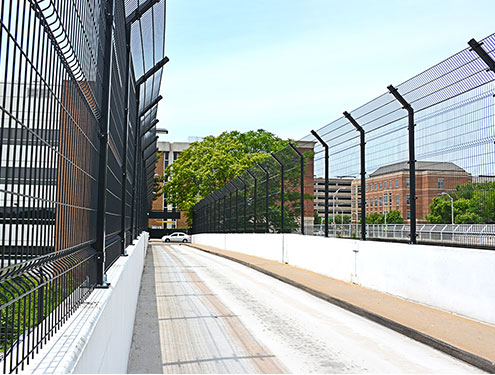
Ornamental fencing will satisfy just about any fencing need. A simplistic design can be made ATFP-compliant (Anti Terrorism Force Protection) in a maximum security or commercial/industrial setting. Likewise, ornate and decorative designs are beautiful in a backyard or garden setting and a short and simple design can be made pool-code compliant for any residential or commercial pool fence.

atfp fence

Wrought iron ornamental fence, like picket fence, is made of several vertical posts set into the ground and attached by two horizontal slats. The bottom slat is usually a few inches from the ground, but on hard surfaces like concrete or pool decks, it can sit right on the ground. Ornamental fencing stands 3 feet to 8 feet tall. If you want an ornamental-fence over 6 feet tall, you need to visit your city permit office for a permit. Like picket-fence and chain-link fence, wrought iron ornamental fencing is does not offer much privacy. Ornamental wrought-iron fencing can be installed on top of brick wall or to top off stone walls as well for added flair and decoration. Ornate fence detailing looks great and comes in a myriad of styles to match your home, garden, or surroundings.

backyard fence Fences help to ensure the security of your business, your home and your pool. Fences keep unwanted visitors and animals out of your specified area.  Fence also confine things.. your children can wander freely or your pets can be leash free. The final ‘best fence choice’ for you will be most productively informed by an onsite consultation with a fence professional for a complete understanding of your needs.


Who Really Uses High Security Access Control?


king resized 600

THE KING USES IT.... THAT IS WHO!

Access Control / Military Science of Fortification:  

Wire Obstacles are used to defend high-security buildings like government buildings. Walls and fences are more difficult to climb if a wire deterrent topping is applied.  They typically adorn the top of strong chain link fences, steel pickets, or stone walls.  At Buckingham Palace, they adorn the tops of high stone and brick walls. If someone tries to jump the fence, there is almost a 100% chance that they will get caught in the security wiring and injure themselves. Wire deterrents are meant to reinforce perimeter security and to slow down or stop an attacker. Barbed wire, barbed tape, and concertina wire are the three main mechanisms used in wire obstacles. Anti-climb fence spikes are also used at times for the same purpose.


Barbed Wire

Barbed wiring are steel ropes with sharp points or 'barbs'. Razor barbed wire is used in high security settings. The hostile appearance of barbed wire is sometimes enough to keep intruders at bay. However, wire cutters can cut through barbed wire and attackers are sometimes prepared to evade barbed wiring. 


Barbed Tape

Barbed tape, or razor wire, is different from barbed wire. Razor wiring looks like sharp razor blades built into a thin steel rope. Barbed wiring  looks like several small coils of sharp steel wrapped around a thin steel rope. Razor wire is sharper than barbed wire, but not as sharp as actual razor blades. Barbed tape is harder to circumvent than barbed wire, and thus is a more effective fortification mechanism.


Concertina Wire

Concertina Wire, also known as Dannert Wire, is large circular coils made out of thin ropes of barbed wire. They are coiled in conjunction with steel pickets or steaks. Constantine wiring can be set up quickly in a war setting, or are permanent fixtures commonly found along prison walls.

Factory made and used since World War I, Concertina wiring in a staple in modern fortification science.


Anti Climb Fence Spikes anti climb fence

Security fence spikes are various types of systems constructed with a thick horizontal steel pole completely covered with very long and sharp angled steel spikes. They are designed to increase levels of security against intrusion, terrorism, vandalism, and to protect high-security buildings. Wire cutters cannot cut though this type of fencing.


SOME Security Breaches at Buckingham Palace:  [From dailymail.co.uk]

:: The most serious breach came in March 1982 when Michael Fagan broke into the Queen's bedroom at the palace. She woke to find him sitting on her bed.

:: In 1992, an intruder walked into St James's Palace and downed a whisky in Princess Alexandra's private apartment.

:: In 1995, student John Gillard rammed the palace gates in his car at 50mph, tearing one off its hinges.

:: In 2003, an undercover reporter from the Daily Mirror got a job as a footman at the palace.

:: The same year, a major investigation was launched after "comedy terrorist" Aaron Barschak gatecrashed Prince William's 21st birthday party at Windsor Castle. Wearing a dress, beard and sunglasses he climbed on stage as the prince addressed the crowd, and kissed him on both cheeks.

homeland security

What Is Anti Terrorism Force Protection or ATFP Perimeter Security?


ANTI TERRORISM FORCE PROTECTION (ATFP )

The United States Marines defines Antiterrorism/Force Protection as a “security program designed to protect military personnel, civilian employees, family members, facilities, and equipment in all locations and situations from the calculated use of violence or threat of violence to inculcate fear, intended to coerce or to intimidate governments or societies in the pursuit of goals that are generally political, religious or ideological.” AT/FP perimeter security systems are generally used when the highest level of protection is needed. They are used around government buildings like the Pentagon, prisons, jails, nuclear power plants, Federal Reserve banks and other high-security buildings.  ATFP systems are designed to reduce the vulnerability of and to protect lives, facilities, equipment and information. In fencing, Antiterrorism & Force Protection refers to how much force a structure can withstand before becoming compromised by an attacker.

k rated fence

What are K-Ratings?

K-Ratings are levels of barrier protection as determined by the Department of State (DoS). A 'K' Rating is also known as a Crash Test Certification. K Ratings are given to a fence, bollard, gate, or other barrier to indicate how effective that barrier is at protecting what it is guarding by measuring the barrier's stopping power in relation to the speed and weight to an incoming vehicle. The standard unit of measurement is based on a 15,000 lb. (6810 kg.) gross weight vehicle impacting a barrier perpendicularly. In order to be DOS certified, the barrier must not bend beyond 39 inches past the pre-impact boundary of the barrier when penetrated by a vehicle.

The following ratings have been used to issue contracts for Crash Rated Fences since 2000:

  • K4 rating is for a vehicle traveling 30 mph
  • K8 rating is for a vehicle traveling 40 mph
  • K12 rating is for a vehicle traveling 50 mph

What Type of Fence is ATFP Compliant?

Wrought-iron, steel, or aluminum ornamental fences are the Anti-Terrorism/Force Protection standard for high-security government buildings; but basically any commercial or residential fence can be made ATFP compliant by installing cable or beam reinforcements. Steel cables are cemented into the ground and wrung along the accompanying fence or gate. Bollards are short and thick (iron or steel) metal posts set at even intervals. They are often times used to control traffic, but bollards can also be used to make certain fencing ATFP compliant.

Reinforcement measures and ornamental fences can make AT/FP fence or gate requirements very expensive. Part of the United State's Policy on Terrorism dictates that all lawful measures to prevent [terrorism] acts and bring to justice those who commit them will be taken. Therefore, while Antiterrorism/Force Protection fencing systems may be costly, they are necessary in many situations.

atfp entry systems 


What Are Passive And Active Force Protection Barriers?


Passive and ActiveForce Protection Barriers are used to create ATFP entry systems or gates. These systems are built to specific standards set forth by the Department of State (DOS) and meet three levels of security - K4, K8, and K12. Depending on the facility, the level of protection can be increased or decreased using these barriers.

Passive Barriers are those that allow entering vehicles to pass at all times. These barriers effectively cause a vehicle to slow down, while still permitting access. Some examples would be jersey walls and boulders. Both these barriers can be placed to create a sort of maze for vehicles to navigate in order to gain access to an AT/FP facility or particular area. These barriers are semi-permanent, immovable and nearly indestructible. 

APassive BarrierTFP passive perimeter security can be accomplished with the use of steel cables or steel guardrails. This can also be setup by any combination of natural and manmade features when natural barriers are not sufficient or present. Distance can be used in combination with an uneven or bumpy surface. This can also be achieved with ditches and berms, or large bolder (3ft. x 5ft.) placement and forestation. This will slow down any moving vehicle or a truck bomb that is attempting to implode a building surface. Remember that AT/FP perimeters are specifically intended to stop only vehicle traffic. This perimeter prevents a bomb threat, not theft.  

Non-Passive Barriers are actual permanent entry obstacles. These AT-FP barricades can be used in conjunction with high security fences and gates or can also be physically mounted on high security gates and fence. These types of barriers are used more often than passive barriers, because they can be moved in and out of their location with relative ease. These barricades are also preferable due to allowing immediate entry and instantly re-barricaded areas. Most commonly used non-passive barriers are bollards, wedge barriers, drop arms, and slide gates.

BollardsBollards are short, vertical posts used to protect potentially vulnerable structures or objects from damage by moving vehicles. Designed for versatility, these posts range in size from 24” to 42” in height, and come in variable diameters to meet a location’s specific security requirements. Bollards can be used to maintain a more natural look, while providing crash-rated security.

Wedge barriers get their name because of their wedge shape when viewed from the side. They are also sometimes called plate barriers because the most common type uses a steel plate angled toward the approaching vehicle.

Drop arm barriers use a beam extending across the road. Usually the beam, or arm, swings vertically to allow the vehicle to pass, but horizontal swinging versions and telescoping beams are also available. Some vertical swing designs require a massive steel counterweight (many thousands of pounds) to balance the beam, and a large capacity hydraulic system to move the beam.

A slide gate can be constructed using high security specifications, to meet ATFP requirements. These gates are most useful in an area that is used frequently, and are available in a variety of styles.

It is easier to implement the AT/FP standards when working on new construction rather than attempting to retrofit the system into an existing environment.  When retrofitting, much of the plan design work will be required to be done onsite and in an emergent way. This can lead to design difficulties and can turn out to be very costly. Conceiving a building or site around AT/FP barrier implements is much easier than situating the AT-FP elements around already existing structures.

Article contributed by Meagan Stone.

What Type Of Facilities Use Crash Fence?


ATFP Crash Rated Gate

Crash Fence, also known as ATFP Fences, K Rated Fence, and High Security Fencing, is found in more places than one would think. The data center down the street, the bank on the corner, the jail downtown, military bases, schools; the list goes on and on. You might not even realize a fence is crash rated unless you know what to look for,

Crash rated materials and products are used in a wide range of commercial, industrial and government applications. These maximum-security fences are also used in high profile private residences and estates. Power plants, fuel depots, chemical plants, federal and state government and military installations all this have this type of fence products installed. Perimeter fencing and gates achieve their K rating through the addition of cable and/or beam reinforcements. Active barriers such as drop arm barriers, wedge barriers, capture barriers and pop up bollards achieve their K rating (as a rule) through enhanced materials and foundations. For example, a project may use heavier gauges of steel anchored into reinforced concrete footings. Regardless of the barrier type, the “K’ rating has become the standard for anti-terrorism crash barrier protection in the last decade. It is commonly know as Anti-terrorism force protection or ATFP.  The American Society for Testing and Materials or ASTM also covers these standard government fence ratings. 

ATFP FenceCrash fences are security systems formed to protect personnel, data, and critical resources from outside attacks.  These attacks could be attempted by the use of Rocket Propelled Grenades (RPG), truck bombs, or any means of weighted attack force. Areas of planned security could include law enforcement centers, intelligence agencies and training facilities.

AT/FP standards set by the federal government can be used to protect areas such as military vicinity, state and local courthouses, banking centers and certain corporate areas. Corporations can deal with security sensitive matters like financial markets and internet service providing server farms.

Crash-secured structures can actually be made better able to prevent blasts from having a great effect. This can be done by ‘hardening’ the exterior of the structure by blast proofing the walls and glass. This can be achieved with the addition of concrete and steel wall supports. A “progressive collapse” structural design can be created to limit the likelihood of a complete building collapse in the event of an attack.

A ‘K' rating is a Crash Test Certification issued by the Department of State (DOS) to a fence, gate, barrier or bollard indicating perpendicular impact penetration of a vehicle of a specific weight at a specific speed. In other words, it measures the particular stopping power of a barrier in relation to the speed and weight of an incoming vehicle.  The K rating weight of the vehicle is standard at 15,000 lbs. These DOS standard barriers can only allow the truck to penetrate no more than 36 inches past the bed.

  • K4 rating is for a vehicle traveling 30mph- A K-4 system, which is two 3/4" cabling with concrete anchoring deadman will stop a 15,000 pound vehicle traveling at 30 miles per hour.

  • K8 rating is for a vehicle traveling 40mph- A K-8 system with two 3/4" cabling and 1" cable with concrete deadman will halt a 15,000 pound vehicle at a maximum speed of 40 miles per hour.

  • K12 rating is for a vehicle traveling 50mph- A K-12 system with three 1" cables will prevent penetration of a 15,000 pound vehicle with a maximum acceleration 50 miles per hour.

This test rating has been used to issue contracts since 2000.

As you can see, crash fences are thoroughly tested and relied upon by various entities. When looking for a fence contractor to install your AT-FP fence, be sure and ask to see a list of at least three similar projects that have been successfully completed in recent years. A fence is only as secure as the crew that installed it, so be sure to interview your contractors.  

Article contributed by Meagan Stone

How Can I Make My Gate Areas ATFP Compliant?


Anti-Terrorism/Force Protection (AT-FP) is generally defined as a federal security program formed to protect personnel, information, and critical resources from outside attacks. These attacks could be attempted by the use of Rocket Propelled Grenades (RPG), truck bombs, or any means of weighted attack force. Areas of planned security could include law enforcement buildings, intelligence and training facilities.

Data Center ATFP GateAT/FP Entry Systems or Gate Systems are created by using passive and/or non-passive barriers.  These gate access systems are specifically designed to reach a level of protection that the facility mandates. These mandates are found in the projects specification section and are designed by highly qualified engineers.

Passive Barriers allow the passage of entering vehicles at all times. This can be achieved by placing jersey wall barriers in away that creates a maze for the vehicle to maneuver.  This effectively forces the vehicle to slow down while permitting access.  This is only one example of this type of passive barrier.

Non-Passive Barriers are actually permanent entry obstacles. These are things like bollards, wedge barricades, drop arms, slide gates and newly designed net systems. These barricades can be used in conjunction with fences and gates or can actually be mounted to fences and gates. They are used more often than passive barriers because they can be moved in and out of their location with ease. This allows instant entry and immediately re-barricaded areas. Pop up bollards and wedge barriers are a favorite among these non-passive barriers for their reliability and relative indestructibility.

To understand the AT/FP entry systems and their requirements, one must also understand the overall perimeter requirements of the system. ATFP passive perimeter security can be accomplished with the use of steel cables or steel guardrails. This can also be setup by any combination of natural and manmade features when natural barriers are not sufficient or present. This can be achieved with ditches and berms, or large bolder (3ft. x 5ft.) placement and forestation. Distance can also be a great ATFP device when used in combination with an uneven or bumpy surface. This will slow down any moving vehicle or a truck bomb that is attempting to implode a building surface. Remember that AT/FP perimeters are specifically intended to stop only vehicle traffic. This perimeter prevents a bomb threat, not theft.  

ATFP Compliant GateIt is easier to implement the AT/FP standards when working on new construction rather than attempting to retrofit the system into an existing environment.  When retrofitting, much of the plan design work will be required to be done onsite and in an emergent way. This can lead to design difficulties and can turn out to be very costly. Conceiving a building or site around AT/FP barrier implements is much easier than situating the AT/FP elements around already existing structures. Imagine attempting to widen the distance between a building and the adjacent road line. It would be simpler to initially plan this rather than propose it at a later point in time.

Another method of obtaining this level of protection is to utilize Engineered K4|K8|K12 Ratings.  These engineered barriers have not undergone the Department of State authorized test, but does meet engineering criteria for equivalent levels of protection. Most Non-DOS Certified systems (other than U.S. Army Corp of Engineers USACE or Military Handbook MIL-HDBK specified) will require an engineer stamp indicating compliance assuring the expected level of protection.

Article contributed By Meagan Stone.

Where Is ATFP Fence Needed?


Data Center Fence

AT/FP perimeter security systems are needed in any area that is in danger of attack from outside forces. Most commonly, we think of military bases, federal buildings and jails for this type of elevated security fencing. Other fence customers that are currently using this type of security are schools, banks, high tech data centers, and many other purposes. Typically any place that is housing large quantities of information, important people and money are high on the terror watch list. These fences are also commonly used by military and civilian airports and at nuclear power and industrial plants. In addition to these, federal institutions utilize this product for reserve banks, the Federal Bureau of Investigations and many other government fence needs. Very high levels of protection are essential in the mentioned target areas. ATFP fences are used for the protection of products, personnel and the general public. These types of institutions have been terrorist targets in the past, and because of this, AT-FP fence was developed.

ATFP stands for Anti-Terrorism/Force Protection, as defined by the US Army and other federal entities. The term refers to the amount of force a structure can withstand without being penetrated by an incoming vehicle. AT-FP ratings are achieved by reinforcing a fence structure with steel cables that run along the fence, into the ground, terminating into large concrete footers. Cable fence reinforcement consists of 2 cables stretching laterally at heights of both 30 and 35 inches. These specific heights are set at 30” to address cars and 35” for trucks. These cables are installed to meet Anti-Terrorism Force Protection fence standards. With these reinforcing ATFP cables and/or beams, a structure achieves certain ratings as detailed below. These ratings are typically referred to as “K” ratings, or crash ratings.  

A ‘K' rating is a Crash Test Certification issued by the Department of State (DOS) to a fence, gate, barrier or bollard indicating the perpendicular impact penetration of a vehicle of a specific weight at a specific speed. In other words, it measures the particular stopping power of a barrier in relation to the speed and weight of an incoming vehicle.  The K-rating weight of the vehicle is standard at 15,000 lbs. These DOS standard barriers allow the truck to penetrate no more than 36 inches past the bed. There are three ratings that are achievable; K4, K8, and K12.

  • A K-4 system, which is two 3/4" cabling with concrete anchoring deadman will stop a 15,000 pound vehicle traveling at 30 miles per hour.
  • A K-8 system with two 3/4" cabling and 1" cable with concrete deadman will halt a 15,000 pound vehicle at a maximum speed of 40 miles per hour.
  • A K-12 system with three 1" cables will prevent penetration of a 15,000 pound vehicle with a maximum acceleration 50 miles per hour.

K-rated crash test

These k-ratings can be achieved by any combination of natural and manmade features when natural barriers are not sufficient or present. Distance alone can be a great ATFP device when used in combination with an uneven or bumpy surface. This can also be achieved with ditches and berms, or large bolder (3ft. x 5ft.) placement and forestation. This will slow down any moving vehicle or a truck bomb that is attempting to implode a building surface. Remember that AT/FP perimeters are specifically intended to stop only vehicle traffic. This perimeter prevents a bomb threat, not theft.

These ratings are also being covered by American Society for Testing and Materials or ASTM. ASTM International is a globally recognized leader in the development and delivery of international voluntary consensus standards. Today, some 12,000 ASTM standards are used around the world to improve product quality, enhance safety, facilitate market access and trade, and build consumer confidence. ATSM fence is also available by qualified fence professionals.

Article contributed by Meagan Stone

What Type Of Fence Styles Can Be ATFP Compliant?


Essentially, any type of fence can be modified to meet AT/FP requirements.

Data Center Security FenceATFP stands for Anti-Terrorism/Force Protection, as defined by the US Army and other federal entities. This term refers to the amount of force a structure can withstand without being compromised by an incoming attack.

The AT-FP ratings are achieved by reinforcing a fence structure with steel cables that run along the fence, into the ground, terminating in concrete footers. These ratings are typically referred to as crash ratings, or “K” ratings. There are three K ratings that are achievable; K4, K8, and K12. The different ratings refer to the amount of weight the structure can resist and remain intact. 

Typically, if business or government institution is going to spend this amount of money on a high tech fence, they may also want a good-looking fence. The most aesthetically pleasing type of fence that can be modified to achieve ATFP ratings is ornamental fence. Ornamental fence is often referred to as “wrought iron”, but are in fact made of aluminum or steel. Iron is an outdated material. These contemporary fence alternatives are more economical, as well as outlasting their dated counterparts. These style fences are often found around the perimeter of military institutions, data centers, federal buildings or even schools.

Alternatively, jails and other institutions that must remain secure without the superficial attributes can also apply K rated cables to chain link fences, achieving the same degree of security. These ATFP compliant chainlink fences are usually constructed of 6 gauge wire as opposed to the more commercially applied 9 gauge wire. This thicker wire, coupled with cable reinforcement and either SS 40 or SCH 40 pipe, can achieve AT/FP federal security standards.

Data Center FenceWhile ornamental styles are the most common installations of crash rated fences, even a wooden fence could be modified to reach the same standard. One way to achieve AT/FP compliance in this type of fence installation is to install a line of bollards, again reinforced with steel cables, in front of a wood fence. This would allow it to attain a K-rated fence standard. Bollards are short, vertical posts used to protect potentially vulnerable structures or objects from damage by moving vehicles. Designed for versatility, these posts range in size from 24” to 42” in height, and come in variable diameters to meet a location’s specific security requirements. Bollards can be used to maintain a more natural look, while providing crash-rated security.

As you can see, Anti-terrorism Force Protection (ATFP) standards can be met in any number of ways in the fence industry. A knowledgeable fence contractor has the capability to help customers design and build crash-rated fences out any material the customer desires. As our society continues to evolve, so do potential acts of terror, and Top Notch Fence Company’s will stay on the cutting edge of technology to continue to provide our customers with ATFP compliant crash rated fences.

Article contributed by Meagan Stone.

What Are Data Center Fence Systems?


data center fence

Security is one of the chief concerns for the data centers that are going up around the country. Data centers house telecommunication systems, data storage systems and computer systems. In order to protect these building and the information they store, companies are investing in crash rated (ATFP) perimeter security systems.

These perimeter security solutions are made up of several different types of barrier systems. Together, these high-security systems achieve a crash rating of K4, K8, or K12. This measure depends upon the amount of force the fencing or gate system can withstand and still remain intact.

A ‘K' rating is a Crash Test Certification issued by the Department of State (DOS) to a fence, gate, barrier or bollard indicating the perpendicular impact penetration of a vehicle of a specific weight at a specific speed. In other words, it measures the particular stopping power of a barrier in relation to the speed and weight of an incoming vehicle.  The K-rating weight of the vehicle is standard at 15,000 lbs. These DOS standard barriers only allow the truck to penetrate no more than 36 inches past the bed. 

  • K4 rating is for a vehicle traveling 30mph
  • K8 rating is for a vehicle traveling 40mph
  • K12 rating is for a vehicle traveling 50mph

The best style of fence that proves to be a favorite among these data centers fence products is Ameristar Impasse II Gauntlet. This fence material is designed with high-tensile steel corrugated pales or tips that rise above the topmost rail with an outward curve, and they terminate with a triple pointed splayed spear tip.  The outward curved pale discourages attempts to gain access by climbers.  This achieves an anti-climb system. This fence is constructed without brackets so that it cannot be disassembled by would be intruders. The cable reinforced horizontal rails are anchored in massive concrete footers, which are buried, sometimes far, below the surface.

K rated gates are constructed of the same style of materials as the fencgate operatore.  High security operators automate these gates and they can either be opened with cards, codes, or manually by guards. These superior entry systems are usually enhanced with extra barrier systems for even more security. Examples of these are wedge barriers and tire deflation (TDD) devises. These allow instant entry and then immediately re-barricade the area. The gates are then animated by operating systems that have fully enclosed motors. A favorite operator for data center gates is HySecurity Slide Driver systems. These hydraulic engines have few moving parts, are highly reliable and last decades, even with constant use.

In addition to crash-rated fence and gate systems, data centers are also using various combinations of natural and man made barriers to maintain security. Bollards, boulders, and jersey walls are often used in conjunction with high security fence systems to these ATFP compliant sites.

Bollards are short, vertical posts used to protect potentially vulnerable structures or objects from damage by moving vehicles. There are many types of bollards that include pop-up bollards, removable bollards, and cable reinforced bollards. Designed for versatility, these security posts range in size from 24” to 42” in height, and come in variable diameters to meet a location’s specific security requirements. The boulders that are being used for security purposes are usually 3’ x 5’ and spaced at regular intervals, as not to let a vehicle pass. Jersey walls can be used to form a maze for vehicles to maneuver. This again reduces speed and adds security to a center.

As our society continues to evolve and we become more dependent on technology, these data centers are invaluable and relevant to our continued economic and social success. These centers rely upon our current selections of security systems to safeguard their information and protect it from external attacks. The anti-terrorism force protection and crash-rated security systems will continue to develop new technologies and fence systems to better protect us.  The demand for the best fence systems will continue to grow as global events unfold.

Article contributed by Meagan Stone.

What is ATFP? And Related K4 K8 K12 Perimeter Security?


atfp fence k rated

A REAL BARRIER TO TERROR

Anti-Terrorism/Force Protection (ATFP) is generally defined as a federal security program formed to protect personnel, information, and critical resources from outside attacks.  These attacks could be attempted by the use of Rocket Propelled Grenades (RPG), truck bombs, or any means of weighted attack force. Areas of planned security could include law enforcement personnel, intelligence and training. For our purposes we will only discuss the physical security of a site.

ATFP standards set by the federal government can be used to protect areas such as military vicinity, state and local courthouses, banking centers and certain corporate areas. Corporations can deal with security sensitive matters like financial markets and Internet service providing computer farms.

ATFP secured structures can actually be made better able to prevent blasts from having a great effect. This can be done by ‘hardening’ the exterior of the structure by blast proofing the walls and glass. The can be achieved with the addition of concrete and steel wall supports. A “progressive collapse” structural design can be created to limit the likelihood of a complete building collapse in the event of an attack.

Perimeter security is typically created by the addition gates and entry areas and is most often delineated by a fence. ATFP fence is a standard fence that is upgraded or one that is originally manufactured to ATFP fence specifications. ATFP perimeter security can be of a very different nature.  

ATFP Entry Systems or Gates are created by using passive and/or non-passive barriers.  These systems are specifically designed for the level of protection that the facility mandates.

Passive Barriers allow the passage of entering vehicles at all times. This can be achieved by placing jersey wall barriers in away that creates a maze for the vehicle to maneuver.  This effectively forces the vehicle to slow down while permitting access.  This is only one example of this type of passive barrier.

Non-Passive Barriers are actually permanent entry obstacles. These are things like bollards, wedge barricades, drop arms, slide gates and newly designed net systems. These Barricades can be used in conjunction with fence gates or can actually be mounted to fence gates. They are used more often than passive barriers because they can be moved in and out of their location with ease. This allows instant entry and immediately re-barricaded areas.

ATFP passive perimeter security can be accomplished with the use of steel cables or steel guardrails. This can also be setup by any combination of natural and manmade features when natural barriers are not sufficient or present. Distance can be a great ATFP device when used in combination with an uneven or bumpy surface. This can also be achieved with ditches and berms, or large bolder (3ft. x 5ft.) placement and forestation. This will slow down any moving vehicle or a truck bomb that is attempting to implode a building surface. Remember that AT/FP perimeters are specifically intended to stop only vehicle traffic. This perimeter prevents a bomb threat, not theft.  

Bear in mind that it is much easier to implement the AT/FP standards when working on new construction rather than attempting to retrofit the system into an already existing environment.  When retrofitting, much of the plan design work will be required to be done onsite and in an emergent way. This can lead to extreme design difficulties and can turn out to be very costly. Conceiving a building or site around AT/FP barrier implements is much easier than situating the AT/FP elements around already existing structures. Imagine attempting to widen the distance between a building and the adjacent road line. It would be much easier to initially plan this rather than propose it at a later point in time.

Some additional research should be done to understand ‘K ratings’ (K4|K8|K12). These ratings are somewhat complex and are standards set by the government to quantify and ensure the inflexibility of implemented AT/FP barrier devices.  Read ‘K ratings’ (K4|K8|K12 Fence) Informational Blog


Article contributed by fence professional John Lowndes.

All Posts