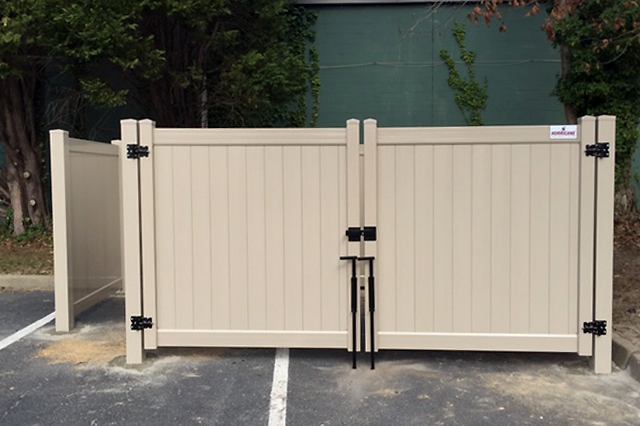
First impressions carry weight, especially in busy commercial areas. A clean storefront or office can be undone the second a customer notices a dumpster sitting out in the open or a noisy HVAC unit humming in plain view. That’s where enclosures come in.
Whether it’s a gate around a trash area or a screen for mechanical equipment, these structures keep utility zones out of sight and out of mind. The bonus is that with today’s materials—vinyl and composite being the most common—you get durability without piling on extra maintenance.
Our Northern Virginia team has built enclosures for property managers, contractors, and business owners across the DMV. The goal is always the same: something strong, compliant with local codes, and professional-looking enough to blend in with the rest of the property.
Need a commercial enclosure installed in the DMV area? Call us at (571) 369-3006 or submit a commercial service request online. Our team specializes in commercial fencing and enclosure solutions across Northern Virginia, Washington D.C., and Maryland.
Contents
Why Commercial Enclosures Matter
When you manage or develop commercial property, every square foot counts—and that includes the spaces you’d rather keep out of sight. Trash collection areas, HVAC units, utility boxes, backflow preventers, and backup generators are all necessary components of a functioning commercial site, but they’re not exactly what you want customers or tenants seeing first.
That’s where commercial enclosures come in.
Enclosures Solve Real Problems:
So what do enclosures actually fix? A lot more than people think:
- First off, they just look better. A dumpster sitting out in the open or an HVAC unit rattling away isn’t exactly a welcoming sight.
- In plenty of counties around Northern Virginia and D.C., they’re not optional—codes and zoning rules require them.
- They add security too. An enclosure makes it harder for people to toss their own trash in your bin or mess with equipment that shouldn’t be touched.
- Smells and noise are a big one. Trash odors or the constant drone of a generator don’t carry as far when they’re behind a wall.
- And finally, protection. Wind, rain, vandalism, stray shopping carts—you name it. A good enclosure takes the hit so your equipment doesn’t.
Whether you’re running a retail strip, multifamily community, medical facility, office park, or industrial site, a professionally installed enclosure can make your property safer, cleaner, and easier to manage.
Common Use Cases for Commercial Enclosures
No two commercial properties are exactly alike—but across industries, certain utility areas always need protection, concealment, or both. Here are the most common applications we see for commercial fencing enclosures in Northern Virginia, D.C., and Maryland:
1. Dumpster Enclosures

Dumpster areas are one of the most common enclosure requests—and often the most visible. Whether it’s behind a restaurant, a grocery store, or an apartment complex, dumpster fencing helps:
- Keep rodents and wildlife out
- Prevent unauthorized dumping
- Block odor and visual clutter
- Comply with health and sanitation codes
Dumpster enclosures are typically gated for front-load truck access and may require concrete pads or bollards as part of code-compliant construction.
2. Mechanical Equipment
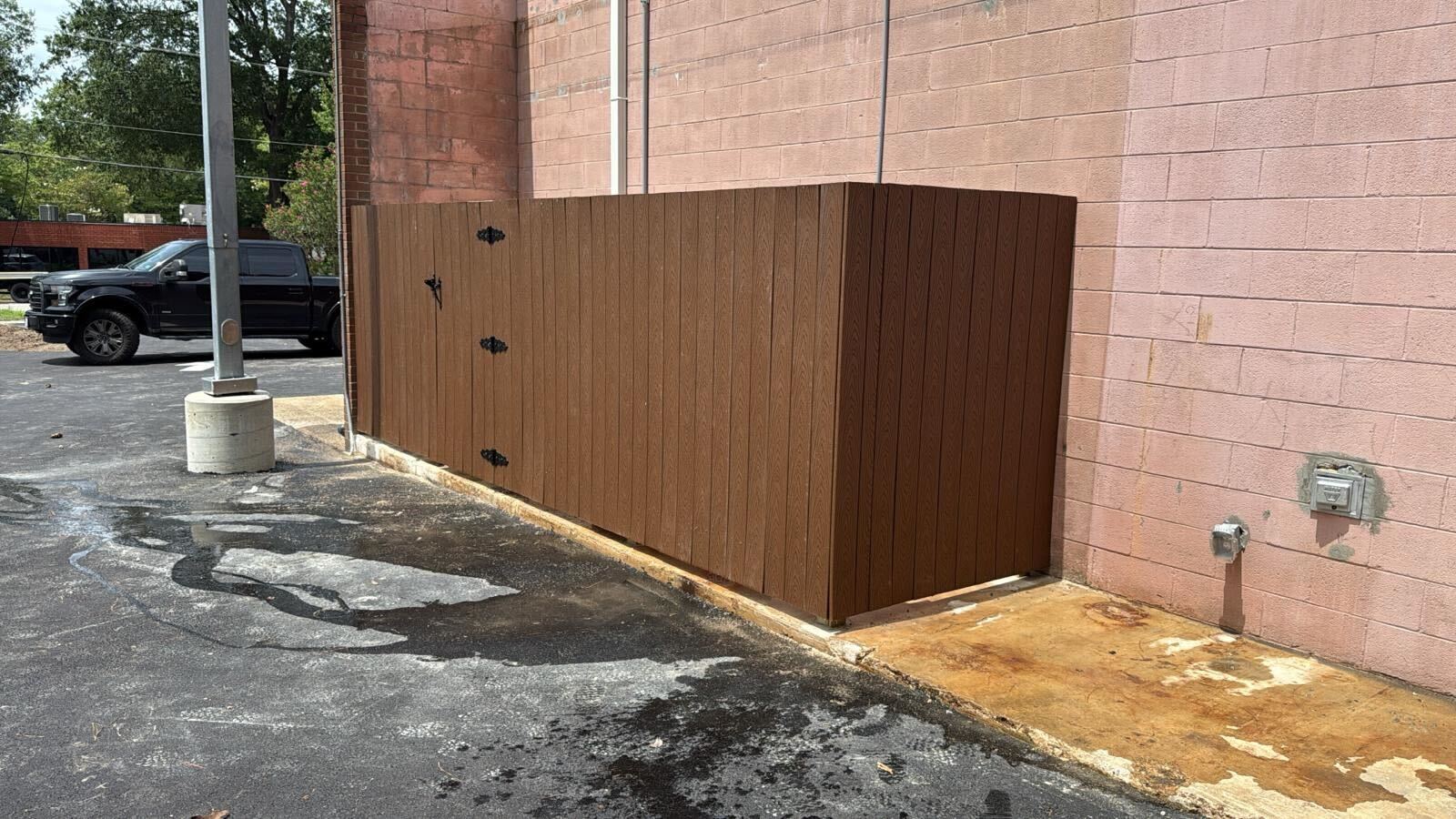
Commercial buildings depend on HVAC systems, condensers, and cooling towers, but they can be noisy, fragile, and not exactly pleasant to look at. A fence or screen keeps them out of sight, protects them from damage, and helps buffer sound—especially important in spaces close to tenants or customers. Enclosures help by:
- Reducing sound transmission
- Preventing unauthorized access
- Shielding from wind and debris
- Improving aesthetics (especially near tenant-facing areas)
We install mechanical enclosures around ground-level HVAC equipment, generators, and utility control boxes at retail centers, data facilities, medical campuses, and more.
3. Utility & Backflow Preventer Enclosures

Counties like Fairfax or Arlington often require these to be protected, either for safety or appearance. The enclosures are usually smaller, but they still matter. They prevent tampering, shield equipment from impact, and give the site a cleaner, more consistent look.
These enclosures are typically lower in height but still serve to:
- Prevent tampering or vandalism
- Protect against impact from vehicles or maintenance equipment
- Maintain a clean, consistent appearance across the site
4. Generator Enclosures
Standby power systems are essential for healthcare buildings, data centers, and critical infrastructure. Enclosures for backup generators:
- Shield the unit from view and weather
- Offer sound attenuation with proper materials
- Deter unauthorized access or damage
These are often integrated with mechanical fencing layouts or standalone structures built to meet very specific dimensional and ventilation needs.
5. Loading Dock or Service Area Screens
Not every screen needs to wrap around a unit completely. In some cases, partial barriers or screens are enough to block views of delivery areas or alleys from public-facing sides of the property. These keep the “working side” of a business separate from the customer experience.
Material Options for Commercial Enclosures
When choosing the right material for a commercial enclosure, it’s about more than just what looks good—durability, maintenance, cost, and code compliance all factor in. While we’ll focus more closely on vinyl and composite in the next section, here’s a breakdown of the main materials used for commercial dumpster and mechanical enclosures, and when they’re most appropriate.
1. Chain Link (with Privacy Slats or Screens)
Best for: Budget-conscious projects, utility areas, temporary or low-visibility spaces.
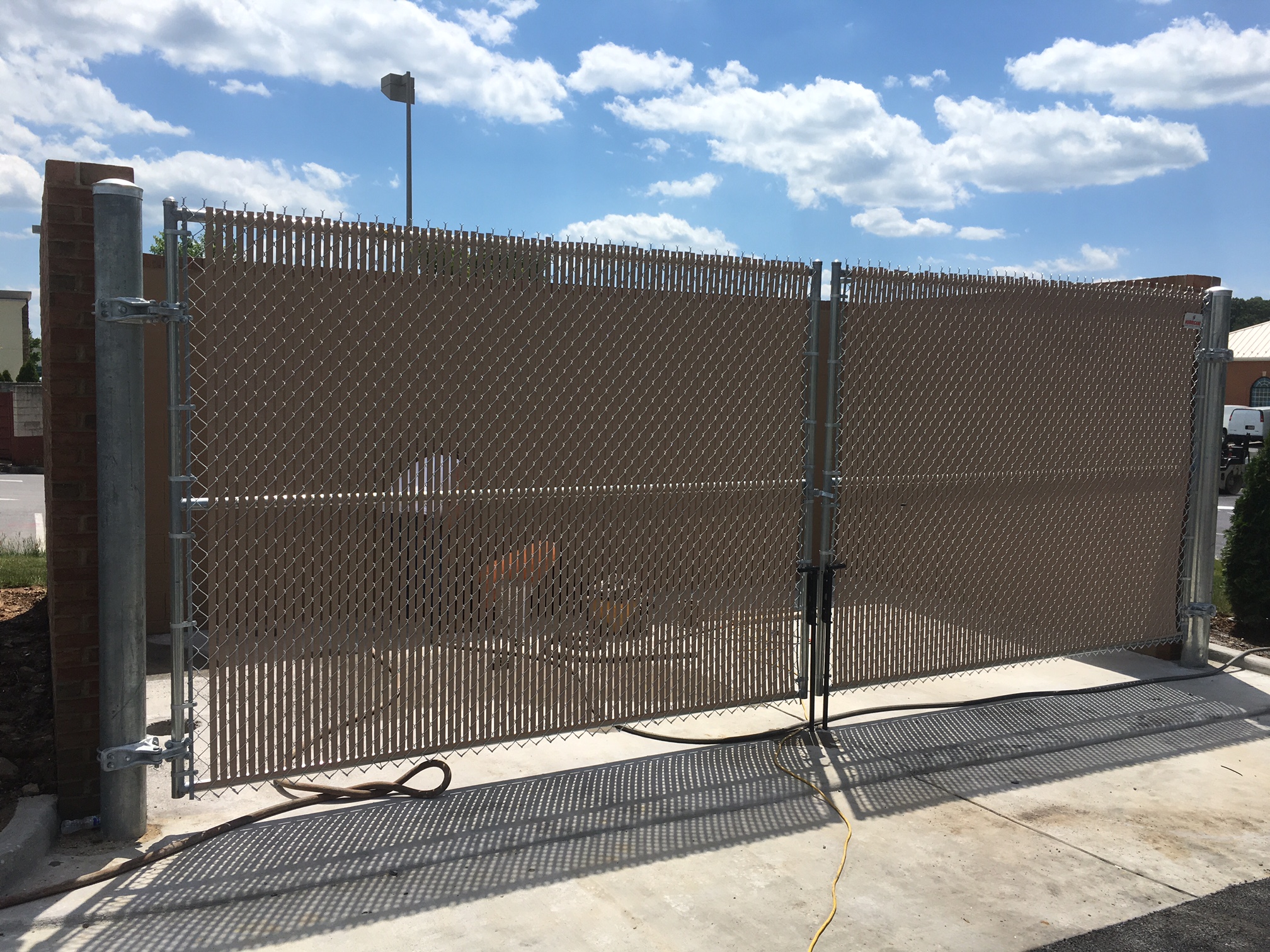
Chain link is often the most cost-effective material—and with vinyl privacy slats or windscreen fabric, it becomes a simple but effective enclosure solution. It's quick to install and durable enough for industrial settings.
Pros:
- Affordable
- Fast to install
- Long-lasting with minimal upkeep
- Great for non-customer-facing areas
Cons:
- Industrial appearance, even with slats
- Not ideal where aesthetics are a priority
- Limited noise or odor control
2. Wood Enclosures
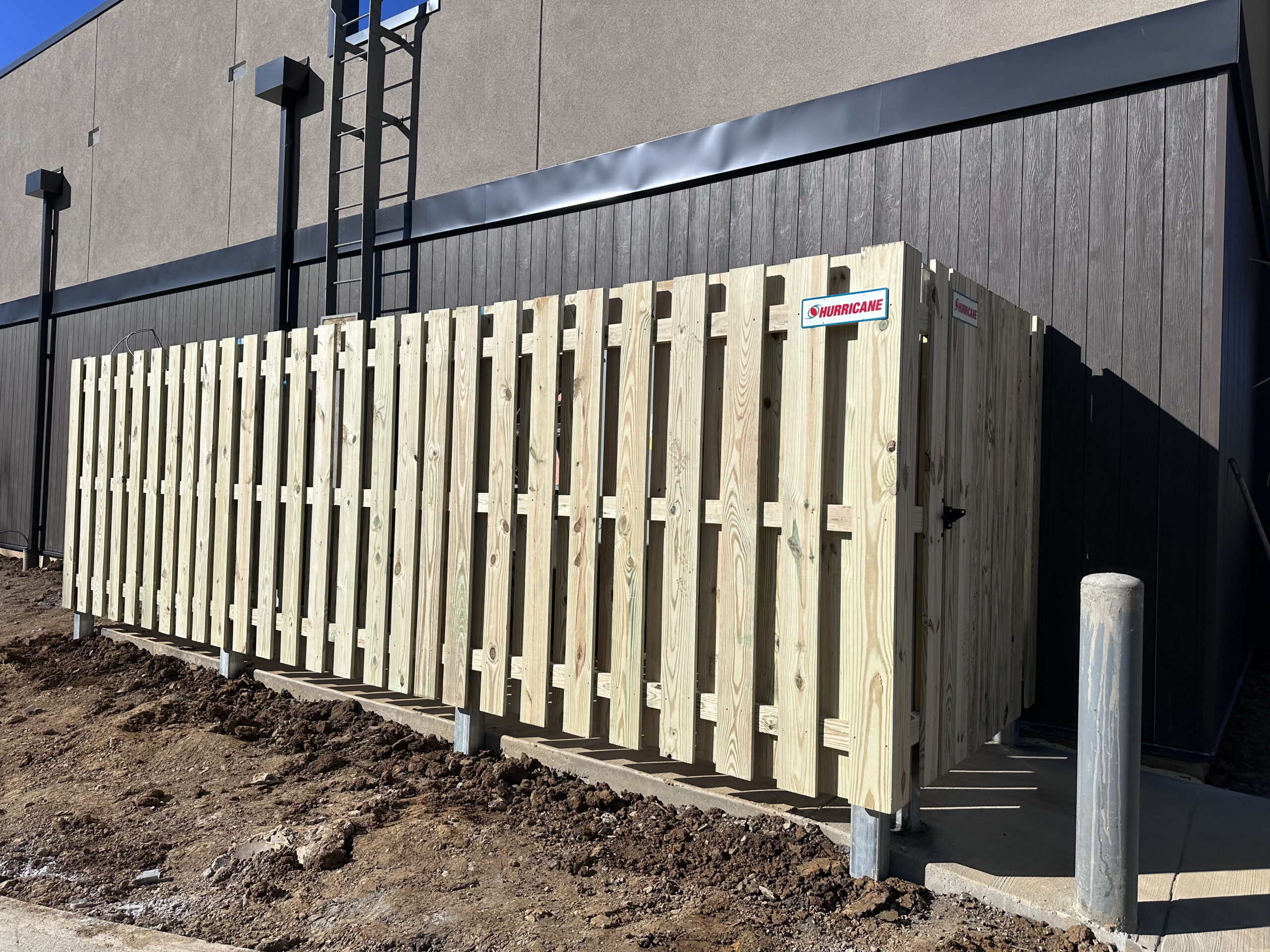
Best for: Short- to mid-term use, traditional looks, or limited-budget projects in less exposed areas.
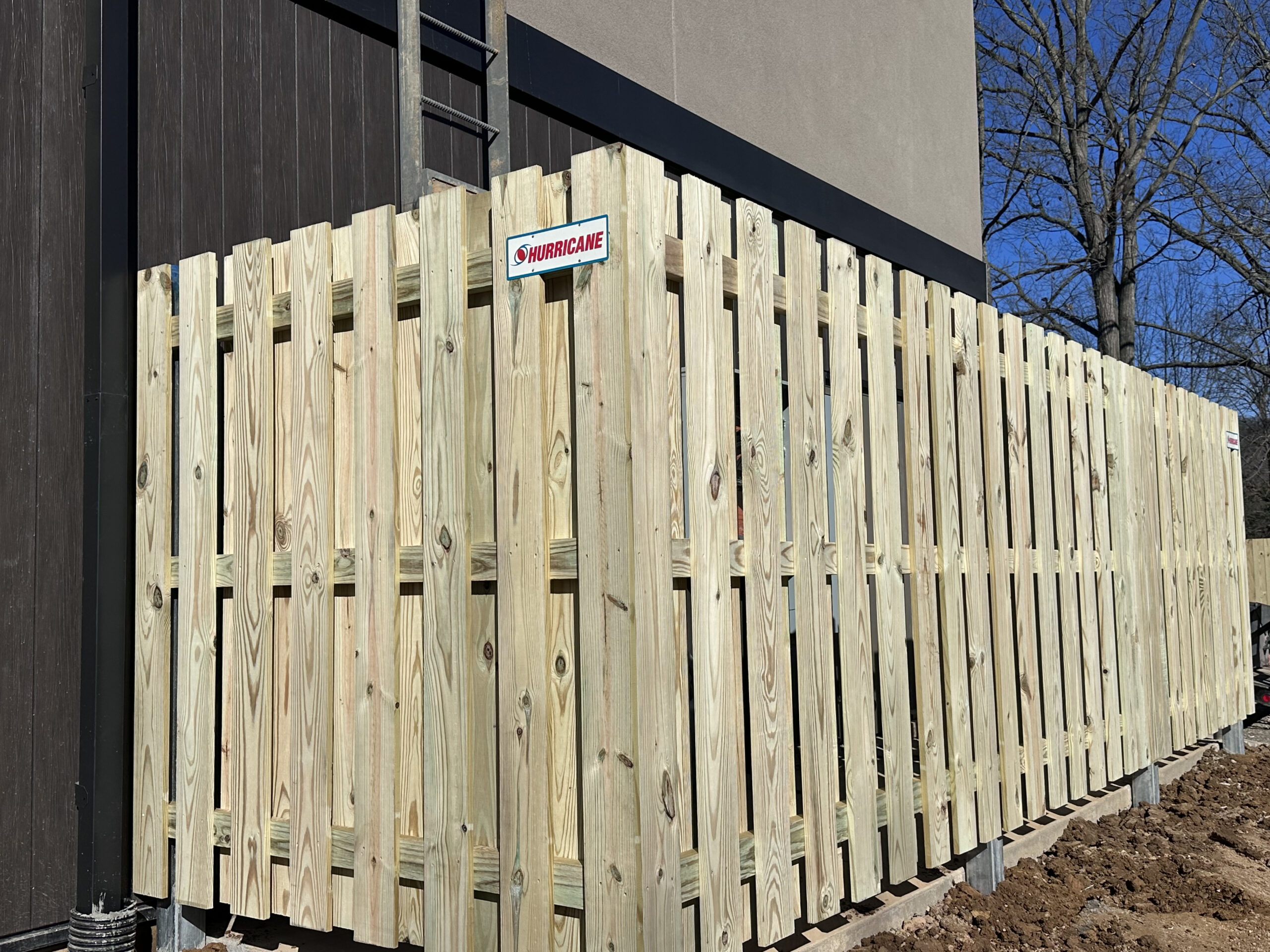
Wood still has a place in commercial fencing, though it’s usually chosen for budget reasons or when a natural look makes sense. You’ll still see it behind certain buildings or in areas where appearance matters less. The downside? It doesn’t hold up forever. Without regular sealing or staining it can warp or split, and in damp climates it tends to rot faster than most owners would like.
Pros:
- Customizable and easy to modify on-site
- Readily available
- Natural appearance
Cons:
- Prone to rot, splitting, and warping over time
- High maintenance (especially for commercial-grade use)
- Shorter lifespan in harsh climates
3. Vinyl Enclosures
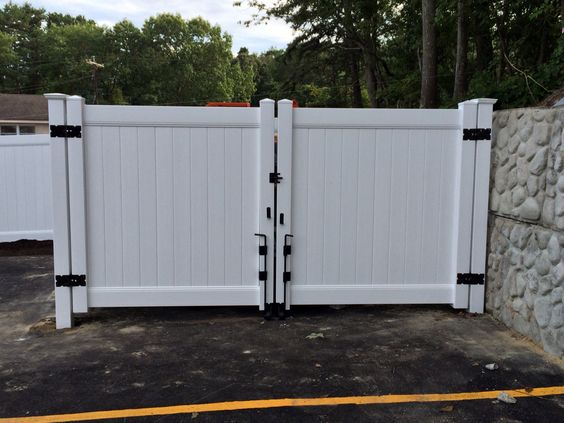
Best for: Professional appearance with very low maintenance—especially for retail, hospitality, or multi-family properties.
Vinyl is one of the most popular choices for commercial enclosures today. It offers a clean, uniform appearance, is highly resistant to weather and wear, and requires virtually no maintenance beyond occasional cleaning. We recommend it often for dumpster and mechanical enclosures in HOA communities, office parks, restaurants, and more.
Pros:
- Low maintenance
- Will not rot, rust, or need painting
- HOA- and code-friendly appearance
- Available in various heights, colors, and styles
Cons:
- Higher up-front cost than chain link or wood
- Not as impact-resistant as composite or metal
4. Composite Enclosures

Best for: High-end commercial spaces looking for upscale design and long-term value with superior durability.
Composite is more of a “premium” option. It mixes wood fibers with plastic so it looks like lumber but lasts a whole lot longer. It doesn’t rot, it doesn’t fade easily, and you don’t need to constantly maintain it. The upfront cost is higher, but for properties where looks really matter—office parks, high-end apartments, hospitals—it’s usually worth it.
Pros:
- Long lifespan and extreme durability
- No staining, painting, or sealing required
- Great sound and odor control
- Modern, upscale aesthetic
Cons:
- Premium price point
- Heavier material can require more robust installation
Why Vinyl and Composite Are Ideal for Commercial Enclosures

For anyone who wants an enclosure that lasts but doesn’t turn into a chore to maintain, vinyl and composite are the two materials most people settle on. We’ve put in both types all over Northern Virginia and D.C.—from apartments to municipal sites. They do cost more up front than chain link or wood, but the trade-off is a cleaner look and a much longer life.
Vinyl Enclosures: The Low-Maintenance Workhorse
Vinyl is simple: it’s strong, it looks neat, and you don’t have to baby it. No sealing, no painting. Just wash it down every now and then. It resists moisture and pests, comes in a few neutral colors (white, tan, gray), and most codes and HOAs are fine with it. For spots that get heavy use—like dumpsters that see daily truck traffic—you can even reinforce the gates with steel.
Key Benefits:
- Minimal Maintenance: No painting, staining, or sealing—just occasional cleaning with soap and water.
- Moisture & Pest Resistant: Will never rot, warp, rust, or attract termites.
- Clean, Consistent Look: Available in standard white, tan, and gray tones that complement most commercial architecture.
- Customizable Heights and Styles: Solid privacy panels, tongue-and-groove construction, and matching gates offer total enclosure solutions.
- Code-Friendly: Vinyl’s clean lines and uniform appearance meet the standards of many HOAs, local governments, and commercial architects.
Best Applications:
- Dumpster enclosures behind restaurants and retail centers
- Mechanical screening near customer entry points
- Storage area fencing at apartment or condo complexes
- Medical or municipal utility area concealment
Vinyl fencing can also include steel-reinforced gates for added strength, especially in high-use or truck-access areas.
Composite Enclosures: Built for High-Visibility, High-Demand Projects
Composite is the step up. It’s heavier, pricier, and built for high-visibility sites. It’s meant to look like real wood, often in darker browns or grays, but it doesn’t rot, warp, or rust. The panels are dense, which helps with privacy and noise control. A lot of composites are also made with recycled content, which can help projects meet sustainability goals.
For places where the enclosure is basically part of the landscape—a business park, a luxury apartment complex, or a medical campus—composite is often the best fit.
Key Benefits:
- Premium Look: Mimics the natural look of stained wood, with options in brown, gray, or textured finishes.
- Extreme Durability: Stands up to sun, wind, rain, and snow without warping, cracking, or fading.
- No Rot or Rust: Zero susceptibility to moisture, pests, or corrosion.
- Superior Privacy & Sound Dampening: Solid panels with weight and density ideal for noise and visual control.
- Sustainability: Many composite materials use recycled content and qualify for LEED credits.
Best Applications:
- High-end apartment or condo developments
- Office campuses and business parks
- Government or public sector infrastructure
- Utility areas in luxury retail or hospitality
Composite fencing is particularly well-suited for enclosures that need to look professional from all sides, making it an excellent choice when dumpsters or mechanical units are visible from neighboring properties or public roadways.
When to Choose Vinyl vs. Composite
| Use Case | Best Choice | Why |
| Budget-conscious retail site | Vinyl | Lower cost, clean appearance |
| High-end residential complex | Composite | Premium look, durability |
| Municipal trash enclosure | Vinyl or Composite | Code-compliant, low maintenance |
| Rooftop HVAC screen | Composite | Stronger wind resistance |
| Restaurant dumpster area | Vinyl | Easy to clean, odor resistant |
Both materials are excellent solutions—it really comes down to your priorities: upfront cost vs. long-term aesthetics and performance.
Get a Quote for Your Commercial Enclosure in Northern Virginia, D.C. & Maryland
If you’re trying to hide dumpsters, fence in mechanical units, or just get your property up to code, the right enclosure can change the way the whole site feels. It’s not just looks—it’s safety, organization, and less hassle day to day.
Our crew at Hurricane Fence has been handling these projects all over Northern Virginia, D.C., and Maryland. We’ve teamed up with property managers, contractors, and local businesses of every size. The goal is always the same: build something that meets code, doesn’t demand constant upkeep, and can actually stand up to the wear and tear of real use.
We’ll help you:
- Choose the right material for your application and budget
- Design for accessibility, durability, and local code requirements
- Coordinate with GC teams, architects, and other site professionals
- Install professionally and on schedule—no cut corners
Ready to get a quote for your commercial enclosure project?
Give our Northern Virginia office a call at (571) 369-3006 or submit a request online to connect with one of our commercial fencing professionals.
We proudly serve the entire DMV region—including Fairfax, Arlington, Alexandria, Loudoun, Montgomery County, Washington D.C., and beyond.
Let’s build something that works as hard as your business does.
Leave a Reply