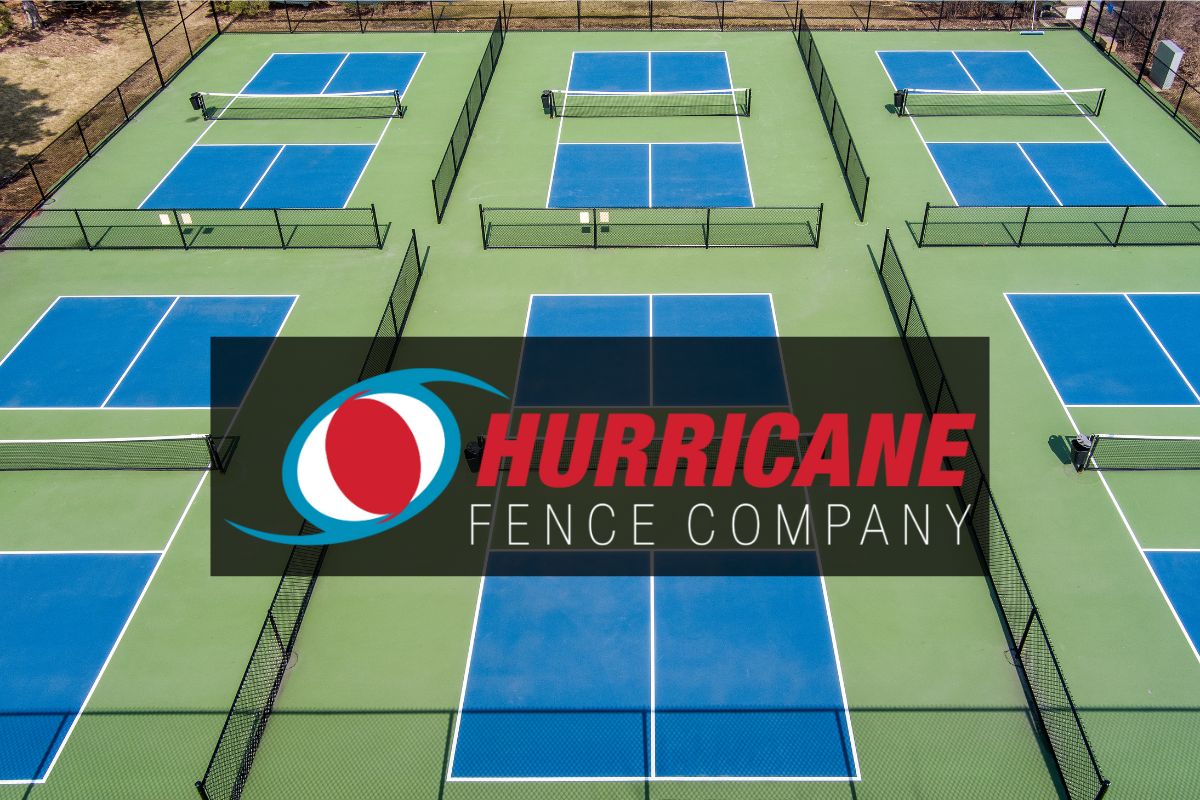
Pickleball isn’t just a game for retirees anymore. It’s everywhere now. Over the past few years it’s blown up—local parks, school courts, HOAs, even the odd backyard with a net strung up. If you’ve been outside lately, you’ve probably heard that sharp pop of a rally in progress.
What people don’t always think about is the fence. The game moves fast, the ball is light, and without a proper fence you’ll spend half your time chasing it into parking lots or neighbor’s yards. A fence also keeps players and bystanders safer, cuts down on some of the noise, and just helps the court hold together through constant use.
That’s where we come in. Our team has been at this for decades, and we’ve seen just about every kind of sports fence project. Some materials work better than others. Some layouts make sense, some don’t. We can walk you through all of it before you break ground.
Got a pickleball court or other sports fencing project on your mind? Give us a call at 804-353-6030 or send a note through the form on our site. We’ll talk it over and help you figure out the right way forward.
Contents
- 1 Why Does Pickleball Court Fencing Matter?
- 2 Converting Tennis Courts to Pickleball Courts: Fencing Considerations and Best Practices
- 3 Best Fencing Materials for Pickleball Courts: Why Vinyl-Coated Chain Link is the Gold Standard
- 4 Why Choose Hurricane Fence for Your Pickleball Court Fencing?
- 5 Ready to Get Started?
Why Does Pickleball Court Fencing Matter?
Most people assume any old fence will do. Toss up some chain link and call it a day. Truth is, pickleball plays a little differently, and the fence ends up doing more work than you’d expect.
1. Keeping the ball in play
Pickleballs are light, almost floaty. One hard angle shot and it’s bouncing out into the street or the neighbor’s yard. A fence with the right height and spacing saves everyone from constantly chasing stray balls.
2. Protecting people
It’s not just about the ball. Courts get crowded, and the game is fast. A fence keeps a hard hit from nailing someone walking past, and it keeps players from running straight into open space. On side-by-side courts, it also keeps one game from bleeding into another.
3. Noise
Anyone who’s heard a pickleball game knows the sound—that sharp pop. Some folks don’t mind it, but neighbors often do. Certain fence setups, like vinyl-coated chain link with windscreens, can help take the edge off the noise. Not silent, but a little friendlier.
4. Built to last
Courts are busier than ever, and fences take a beating. Weather, repeated ball contact, the occasional lawnmower or leaf blower bump. A good install holds up year after year instead of leaning or rusting out after two.
5. Looks and rules
In neighborhoods with HOAs, or anywhere visible from the street, looks count. Black vinyl-coated chain link blends in well, but some places prefer aluminum panels or even privacy fencing if the court sits close to homes. It’s partly about appearance, partly about meeting whatever guidelines are in place.
Converting Tennis Courts to Pickleball Courts: Fencing Considerations and Best Practices
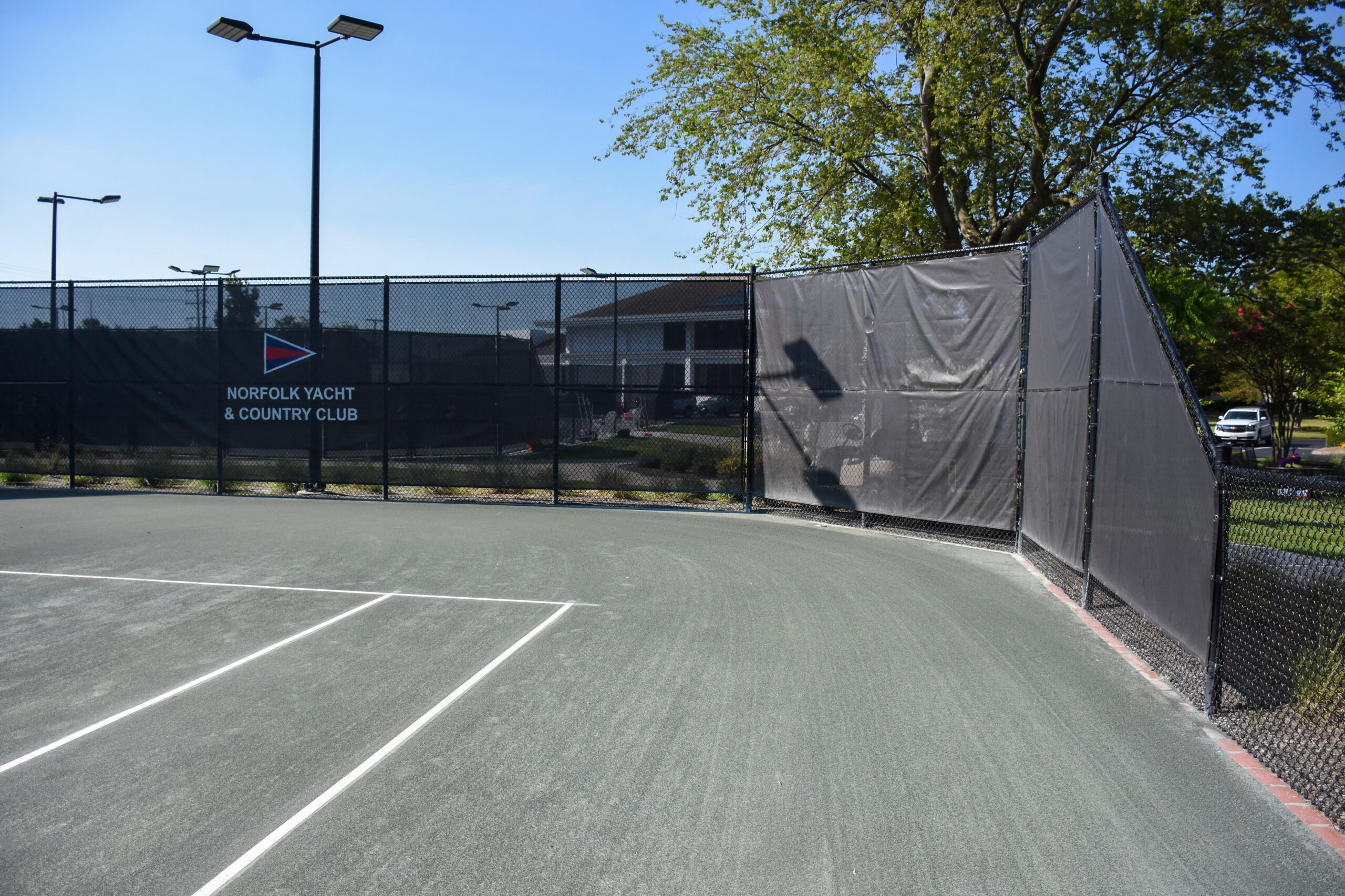
One of the fastest ways to meet the demand for pickleball isn’t to build from scratch at all, but to take an existing tennis court and rework it. A lot of parks, schools, and HOAs are already doing this because it’s cheaper and faster than pouring a brand-new surface. But the fencing usually needs some adjustments.
Here are a few things worth thinking about if you’re looking at a conversion:
1. Court size and layout
A tennis court is huge compared to pickleball. Standard size is 60 by 120 feet, while a pickleball court is only 20 by 44. That means you can actually fit four pickleball courts inside the footprint of one tennis court. The catch is the fencing. On the outside perimeter you’ll still want taller fences—10 to 12 feet is common—to keep balls from flying off. Inside, though, lower fences (around 4 to 6 feet) between courts can help with airflow, visibility, and just making the space feel less boxed in.
2. Old fencing might not work as-is
If the tennis court already has fencing, good. But check the layout. Gates might be in the wrong spots for how people will flow in and out of multiple smaller courts. The mesh size might be too wide to handle the lighter pickleballs. And if you’re planning on league play or community events, you’ll probably want some dedicated zones for spectators, which may mean shifting or cutting into the fencing.
3. Divider fencing options
For new fences inside the footprint, you’ve got two main options. Surface-mount systems that bolt directly into the concrete are quicker and don’t mess with the existing surface much. In-ground posts are more permanent but require drilling and patching. Which one makes sense depends on how permanent the setup is supposed to be and how old the court surface already is.
4. Plan for the extras
Lighting, gates, locks, even storage can all tie back into the fence. Want to add lights later? Mounting brackets can go right on the fence line. Planning for paddle racks or lockers? Same deal. Thinking about these details ahead of time saves money and headaches once people are already lining up to play.
Best Fencing Materials for Pickleball Courts: Why Vinyl-Coated Chain Link is the Gold Standard
People ask this a lot, and while there are a handful of options, most of the time the answer is simple: vinyl-coated chain link. It’s been used around tennis and basketball courts for decades, and it just plain works. Most of the pickleball courts we’ve helped with end up using it.
Here’s why it makes sense:
1. It’s built for sports
This kind of fence has been the standard at rec centers and schools for years. It holds up when balls hit it over and over, and you can still see clearly through it. Pickleball courts, especially the ones in parks or HOAs, get heavy use, and chain link doesn’t wear out quickly.
2. Safer edges
Games move fast. Players sometimes chase a ball right into the fence. The vinyl coating takes some of the bite out of that contact. Less chance of scratches or rusty wires poking out, which is especially good if kids or older players are on the court.
3. It keeps the ball in
Pickleballs are light and have a mind of their own. The 2-inch mesh size on chain link is perfect for catching them while still letting air and light through. Most courts go with 10–12 foot fences around the outside and shorter ones—about 4 to 6 feet—between courts.
4. You can dress it up
Chain link doesn’t have to look plain. Black vinyl is common and blends in well, but you can add windscreens, privacy sltas, or even a logo if it’s a community court. Those extras give it more polish without going overboard.
5. Budget friendly
Compared to aluminum or composite fencing, vinyl-coated chain link usually costs less and lasts longer. It’s quicker to put up, doesn’t need much maintenance, and does well in different climates. For projects with multiple courts, that price difference really matters.
6. Already approved
Most schools, parks, and HOAs already list this type of fence in their guidelines. It checks the boxes for pickleball recommendations, ADA access (with the right gates), and local codes. Picking a material that’s already approved means less red tape later.
Why Choose Hurricane Fence for Your Pickleball Court Fencing?
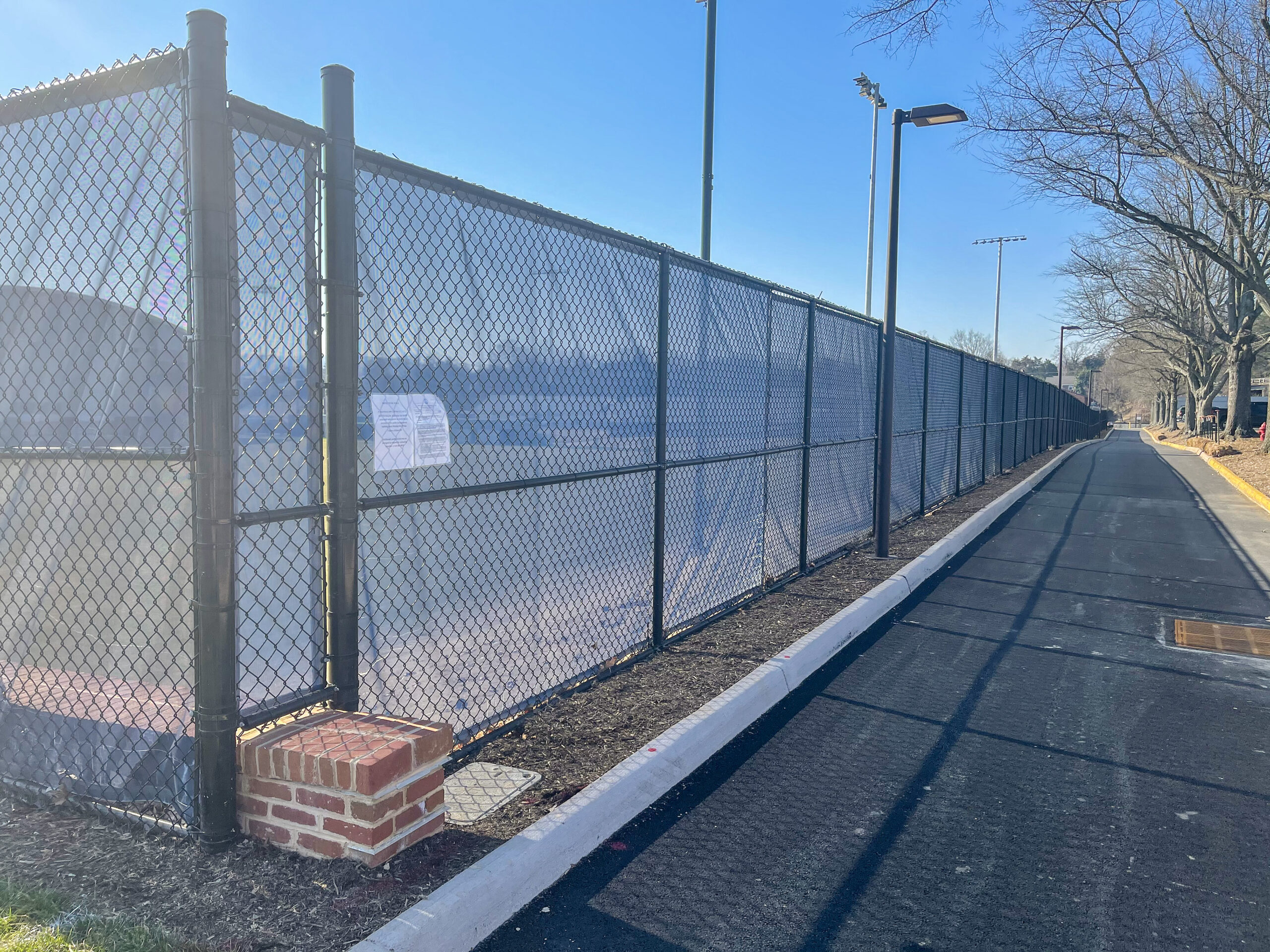
Over the last 30 years we’ve done everything from backyard projects to big commercial installs, and that includes a lot of sports courts. HOAs, parks, schools, apartment complexes—you name it. Chances are if you’ve played a game in Virginia or nearby, you’ve probably seen some of our work without realizing it.
What we bring to the table is balance. We know how to build something tough enough to handle constant play, but we also know how to keep it looking good and fitting within community rules. And because we’ve been at this for decades, we can usually spot problems before they happen, saving you time and money in the long run.
Ready to Get Started?
Whether you’re putting in a brand-new pickleball court or turning an old tennis court into something new, the fence is a big piece of making it work. We’d be glad to help. You can reach us online through our request form, or just call our Richmond office at 804-353-6030. We also have teams in Portsmouth, Northern Virginia, and Raleigh, so wherever your project is, we can cover it.

Leave a Reply