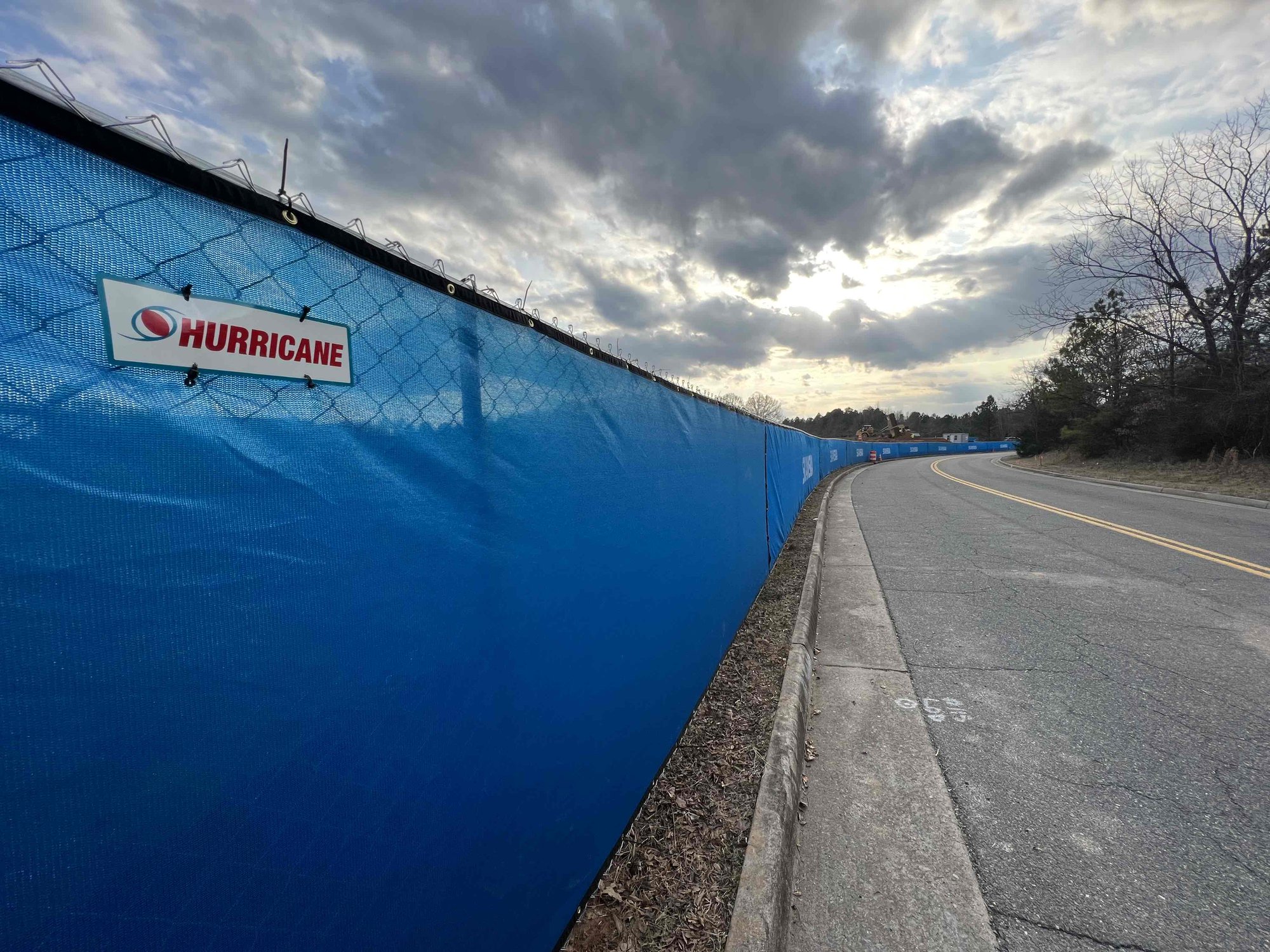
When facilities consider perimeter fencing, the conversation usually starts with protection but quickly expands to access control, visibility, maintenance, and long-term costs. Chain-link fencing and ornamental steel both handle those needs well, just in very different ways. The right choice depends less on which fence is “better” and more on how your facility actually operates day to day.
A helpful way to think about this decision is to look at how much visibility you need versus how much visual presence you want. Warehouses, distribution centers, schools, and municipal properties often need clear sightlines for monitoring activity. In those cases, chain-link fencing keeps costs reasonable while maintaining awareness, while ornamental steel leans more into appearance, structure, and deterrence.
Contents
- 1 Why Facilities Choose Chain-Link Fencing for Visibility and Cost Control
- 2 What Operational Features Matter When Comparing Chain-Link Fencing and Steel
- 3 How Ornamental Steel Fencing Enhances Aesthetic and Structural Presence
- 4 Where Chain-Link Fencing Performs Best in High-Use Industrial Zones
- 5 Why Ornamental Steel Strengthens Security Beyond Basic Perimeter Control
- 6 What Facilities Gain When Comparing Chain-Link Fencing with Ornamental Steel
- 7 Choose the Fence That Matches Facility Scale and Security Demand
Chain-Link Fencing vs Ornamental Steel: Which is Best?
Chain-link fencing provides cost efficiency, visibility, and scalable security for commercial and industrial environments. Ornamental steel brings stronger visual authority, higher impact resistance, and a more finished look that fits entrance-facing or public areas. The best option depends on how your facility balances cost control, surveillance needs, and long-term security goals.
Why Facilities Choose Chain-Link Fencing for Visibility and Cost Control
Chain-link fencing is often the first choice when visibility matters just as much as security. Cameras, patrol teams, and on-site staff can see clearly across the entire perimeter, which improves response time and reduces blind spots. For large facilities, that visibility combined with lower installation cost makes chain-link fencing hard to beat.
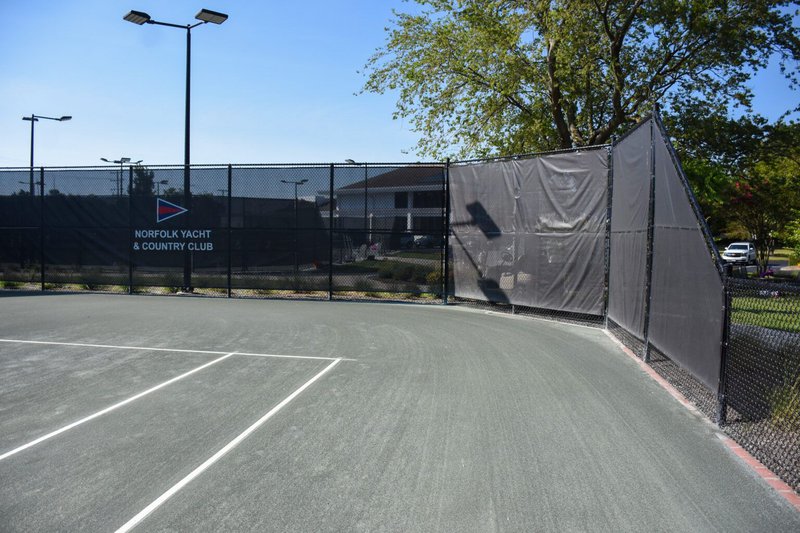
Chain-link also scales easily as security needs change. Mesh systems accept upgrades like heavier gauge wire, barbed or razor extensions, privacy screening, and integrated access control without requiring a full redesign. That flexibility is why many industrial yards, storage areas, and utility sites rely on chain-link fencing as their primary perimeter.
Weather exposure is another practical advantage. When galvanized or coated, chain-link handles rust and moisture well. Repairs stay simple because damaged sections can be replaced without disturbing the entire fence line. Over time, the cost-to-strength balance keeps chain-link fencing a reliable option for both modest and large facilities.
What Operational Features Matter When Comparing Chain-Link Fencing and Steel
Looking at how each fence performs under real operational demands makes the decision clearer. Both materials define boundaries effectively, but they solve different problems.
- Cost efficiency: Chain-link fencing costs less upfront and covers large areas efficiently, while ornamental steel requires a higher initial investment and more detailed installation.
- Deterrence level: Steel fencing offers stronger climb resistance and a more intimidating visual presence, while chain-link relies on openness combined with add-on security features.
- Visibility: Chain-link allows airflow and full sightlines across industrial yards, whereas steel emphasizes boundary authority and visual separation.
- Impact resistance: Steel rails hold up better in high-contact zones, while chain-link distributes force through its woven design instead of absorbing direct impact.
- Maintenance: Chain-link needs minimal finishing upkeep, while steel benefits from periodic coating to maintain appearance and prevent corrosion.
Facility planners often weigh exposure, surveillance coverage, gate placement, and future expansion before committing to one system. Many properties use both, installing ornamental steel at entrances and public-facing zones while running chain-link fencing along longer perimeter stretches. That mixed approach keeps security high without overspending where visibility matters more than appearance.
How Ornamental Steel Fencing Enhances Aesthetic and Structural Presence
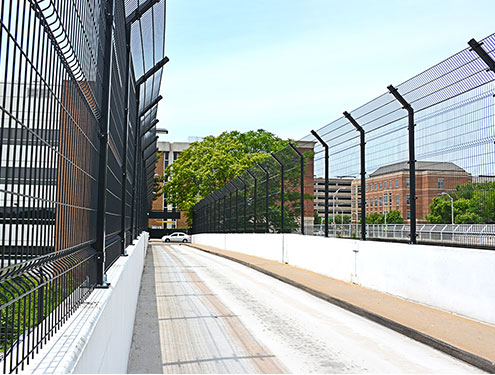
Ornamental steel fencing shines where appearance carries real weight. Offices, schools, government buildings, and civic spaces often choose steel when security needs to look intentional and professional from the first glance. Clean pickets and structured rails add definition without fully closing off the space.
From a performance standpoint, steel handles force and impact better than chain-link in similar conditions. Heavier construction adds stability around gates and vehicle entry points, which is why steel is often used where controlled access is critical. The added weight and rigidity also reinforce the sense of security for visitors and staff.
Entrance zones benefit the most from ornamental steel. First impressions matter, and steel fencing pairs naturally with landscaping, signage, stonework, and branded exteriors. It sends a clear signal of authority and organization while still allowing controlled visibility into the property.
Where Chain-Link Fencing Performs Best in High-Use Industrial Zones
Industrial sites function very differently than front-facing campuses, and fencing has to match that reality. Chain-link fencing performs best in distribution yards, outdoor storage areas, and high-traffic industrial zones where visibility and airflow matter more than visual polish. Security teams can see movement clearly across long spans without panels blocking sightlines.
Chain-link fences can be repaired efficiently because damaged sections disconnect without dismantling entire runs. If a section gets damaged, crews can disconnect and replace only that portion instead of tearing down a whole fence run. The woven structure also absorbs vibration from equipment, trucks, and daily activity better than rigid systems.
For large industrial footprints, cost-to-coverage becomes a deciding factor. Steel fencing across long perimeters adds up quickly, while chain-link scales efficiently without sacrificing durability. With the right wire gauge and proper post depth for local climate conditions, chain-link delivers long service life even in demanding environments.
Why Ornamental Steel Strengthens Security Beyond Basic Perimeter Control
Ornamental steel comes into play when a facility needs more than basic boundary definition. Its heavier profile creates a visible sense of authority that discourages climbing and tampering more effectively than chain-link. Properties with higher asset value or public exposure often step up to steel for that reason alone.
Steel holds its shape under force in a way mesh fencing cannot. Rigid rails and pickets resist bending and support heavier gate hardware, which matters at controlled vehicle entry points. With proper anchoring and protective coatings, steel fencing stays stable through wind, impact, and seasonal weather shifts.
- Visual authority: Steel delivers a strong, architectural security presence, while chain-link focuses on function over appearance.
- Impact resistance: Steel resists concentrated force better, while chain-link flexes and may distort under repeated stress.
- Entrance security: Steel significantly strengthens public-facing entry zones, where perception matters.
- System integration: Steel pairs more easily with advanced access control and reinforced crash posts.
- Long-span stability: Steel maintains posture across spans when posts are properly set, while chain-link may need tension adjustments after stress events.
High-security facilities lean toward steel where exposure, liability, and deterrence need to be immediately visible. Even without full opacity, steel fencing sends a clear message of control and oversight.
What Facilities Gain When Comparing Chain-Link Fencing with Ornamental Steel
The biggest takeaway is that both materials offer value, they just solve different problems. Chain-link fencing supports large layouts where visibility improves monitoring and cost control matters most. Ornamental steel adds structure, presence, and authority in areas where people interact directly with the property.

Decision-making becomes easier when security budget, exposure level, and brand image are considered together. Steel reduces intrusion risk through physical and visual presence, while chain-link keeps perimeter costs manageable over distance. Many facilities combine both, using steel at entrances and chain-link along extended boundaries.
Choose the Fence That Matches Facility Scale and Security Demand
Chain-link fencing and ornamental steel both perform well for commercial perimeter control when used intentionally. Visibility needs, deterrent strength, maintenance cycles, and overall facility scale should guide the choice. The most effective perimeter is the one that matches how the site actually operates, not just what looks standard on paper.
For specification planning or selection between chain-link fencing and ornamental steel installations, reach out to us at Hurricane Fence to choose the right fencing for facility protection, performance, and growth scalability.


Leave a Reply